Glycemic Index Explained: What It Means and Why It's Not Enough
Glycemic index (GI) and glycemic load (GL) explained clearly: how carbohydrates affect blood sugar, what role GI plays in diabetes and weight management.
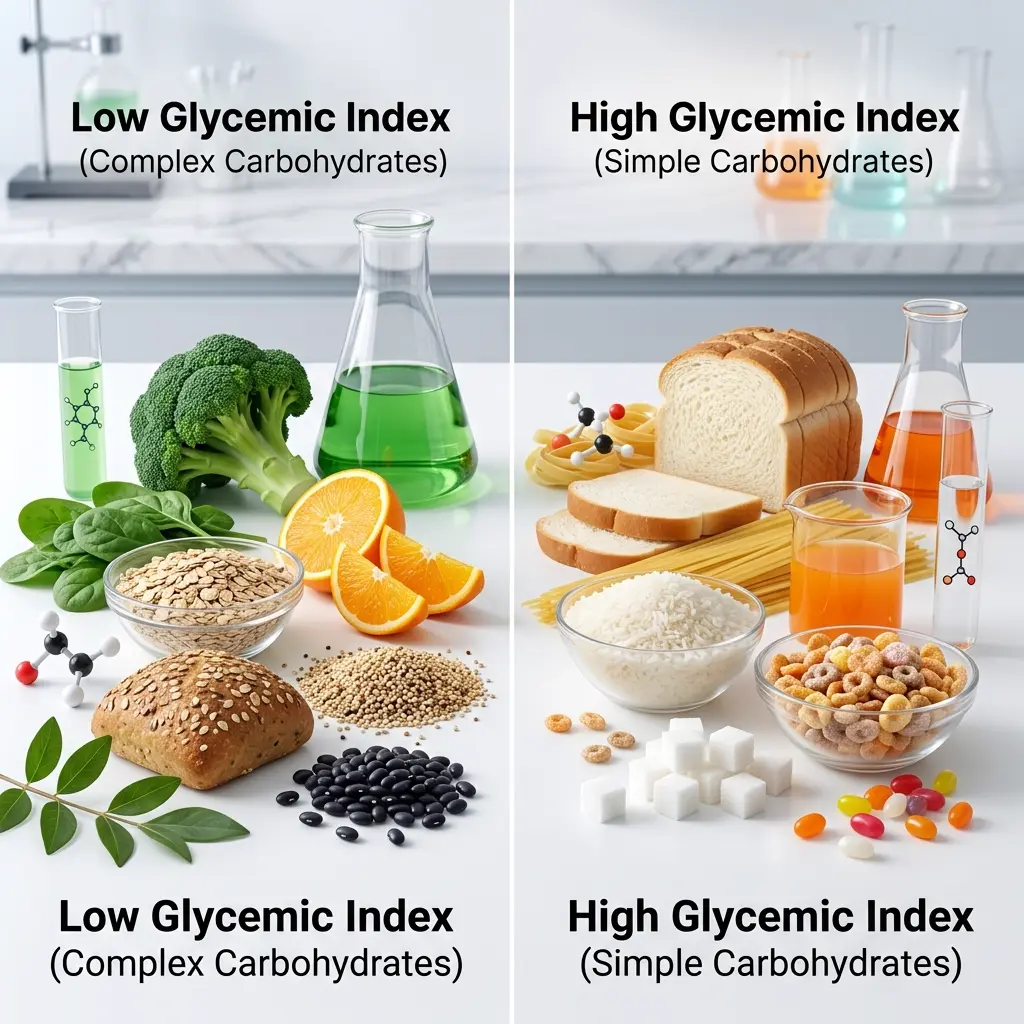
Definition: What is the Glycemic Index?
The glycemic index (GI) measures how quickly a carbohydrate-containing food raises blood glucose levels compared to pure glucose (GI = 100). Developed in the 1980s by Dr. David Jenkins (University of Toronto), it enables a standardized classification of foods:
- Low GI: ≤ 55 (e.g., legumes, rolled oats)
- Medium GI: 56–69 (e.g., whole grain bread, basmati rice)
- High GI: ≥ 70 (e.g., white bread, cornflakes, potatoes)
Biochemical Background: How Carbohydrates Affect Blood Sugar
Digestion and Absorption
Carbohydrates are broken down in the small intestine by enzymes (amylase, maltase, sucrase) into monosaccharides (glucose, fructose, galactose). Glucose is absorbed via SGLT-1 transporters and travels via the portal vein to the liver.
Speed of absorption depends on:
- Starch structure: Amylose (linear chains) is digested more slowly than amylopectin (branched)
- Fiber content: Soluble fiber slows gastric emptying and glucose absorption
- Degree of processing: Finely milled flour → very rapid absorption
- Fat/protein content: Delay gastric emptying → lower GI effect
Insulin Response
High GI → rapid blood sugar rise → massive insulin secretion → reactive hypoglycemia → cravings.
Low GI → slow, flat blood sugar rise → moderate insulin response → longer-lasting satiety.
The Problem with GI Alone: Glycemic Load
The GI says nothing about the quantity of carbohydrates consumed. That's why the Glycemic Load (GL) was developed:
GL = GI × Carbohydrates (g) / 100
Example: Watermelon has a high GI (72) but few carbohydrates per serving:
- GL watermelon (120 g): 72 × 6 / 100 = 4.3 → low!
- GL white bread (60 g): 73 × 30 / 100 = 21.9 → high!
Daily practice guidelines:
- Meal GL < 20: low (recommended)
- Daily GL < 100: optimal
GI and Health: What the Research Shows
Type 2 Diabetes
Meta-analyses show: a low-GI diet lowers HbA1c by 0.5% and improves glucose homeostasis.
Weight Management
A systematic review (2019, Cochrane) shows moderate evidence: low-GI diets lead to slightly more weight loss compared to high-GI diets at equal caloric intake — likely through better satiety regulation.
5 Daily Strategies for GI Optimization
- Prioritize fiber: Eating vegetables first reduces the meal's GL.
- Choose whole grains: Whole grain cereals have lower GI due to amylose content.
- Cook al dente: Overcooked grains/pasta have higher GI.
- Cool down: Cooled potatoes/rice contain more resistant starch (GI-lowering).
- Combine: Protein + fat with carbohydrate meals lowers the GI effect.
Conclusion
The GI is a useful but incomplete tool. Nutrion automatically calculates the glycemic load of your meals and optimizes your nutrition plan for maximum blood sugar stability.